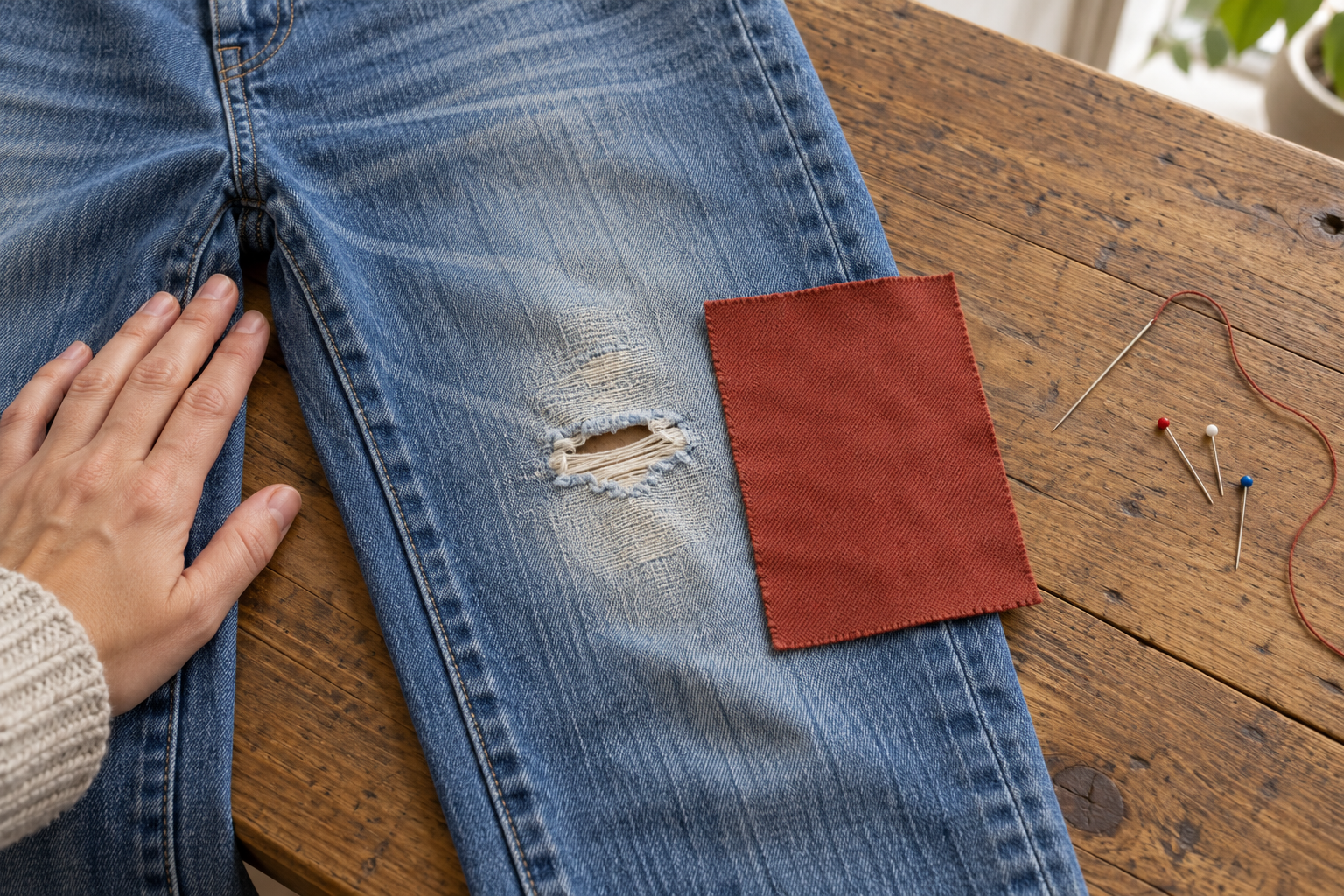
The jeans were not dead. One knee had developed a hole, which is a problem a knee experiences with impressive regularity. The rest of the garment was continuing its career perfectly well.
My first instinct was to search for a replacement pair. This is an astonishing reflex when you think about it: a small area of damage, an entire object condemned, another shopping expedition summoned. I work around donated clothes all day. I should have recognized the absurdity before the search results loaded.
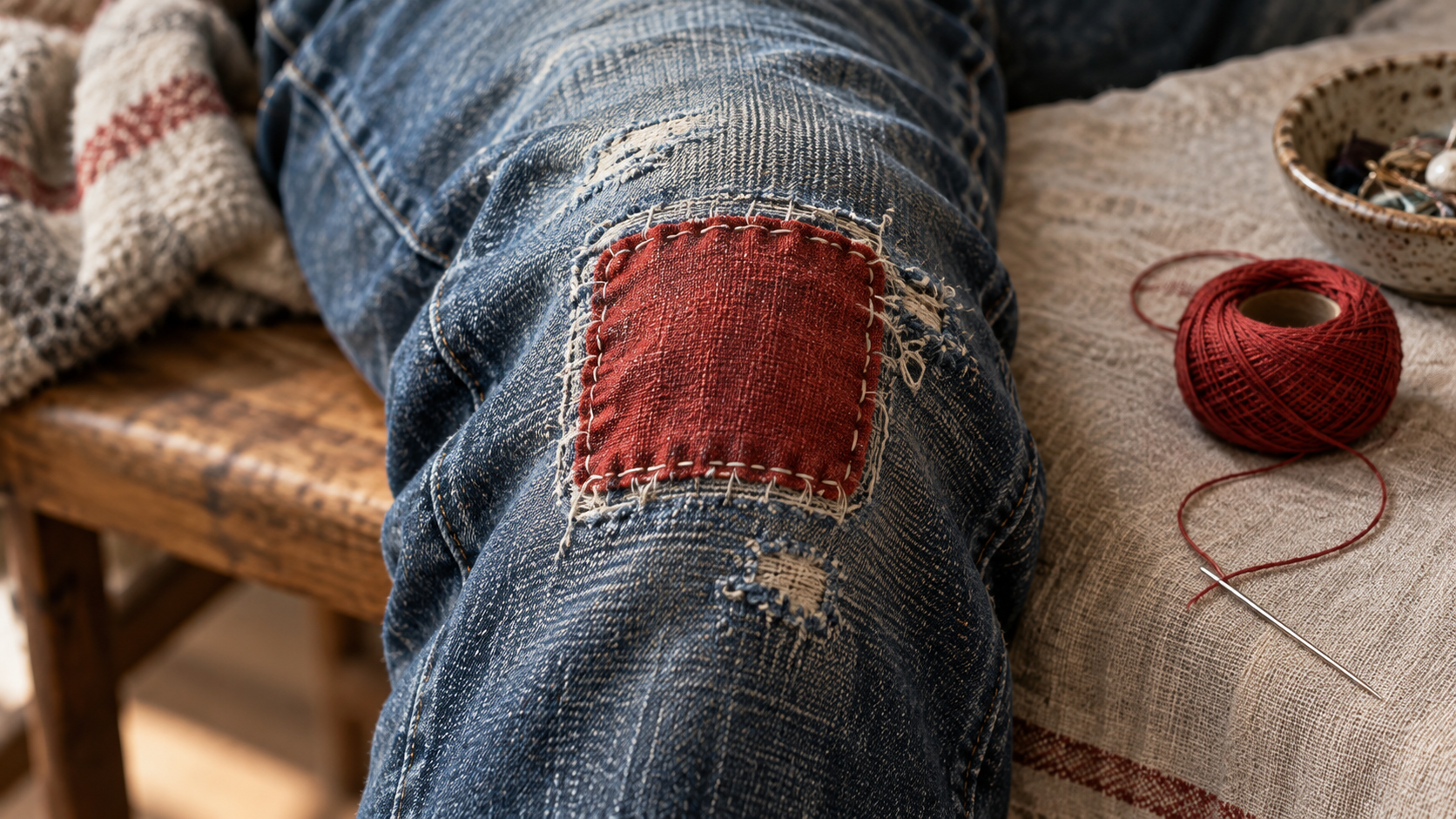
So I found a scrap of red fabric, cleared a corner of the dinner table and made a patch. The first stitches were uneven. The last stitches were only slightly less uneven. The repair looked like a person had made it, which was accurate.
A repair is permitted to be visible
I had delayed mending because I imagined a successful repair had to disappear. Invisible work is a skill and can be beautiful. It is not the only way to make something wearable again. My jeans were already casual, worn and mine. A red knee did not destroy a formal tailoring masterpiece.
The patch also gave the damage a boundary. I looked at the surrounding fabric before starting rather than sewing onto an area too fragile to hold the work. The scrap needed to suit the job, not just provide an appealing color. I pinned, tried the position and moved it when the first placement felt awkward.
Ten minutes in the headline is an invitation to begin, not a contractual promise that every damaged garment can be fixed between advertisements. Some repairs are involved. Some fabrics need experience. Some clothes are genuinely beyond the repair I can provide. The point is to inspect the actual problem before declaring replacement inevitable.
A missing button, a small loose seam or a simple patch can be a manageable first job. It can also be a reason to ask someone more experienced how they would approach the fabric. Asking for help does not cancel the repair's usefulness.
Do not buy a new hobby to fix one knee
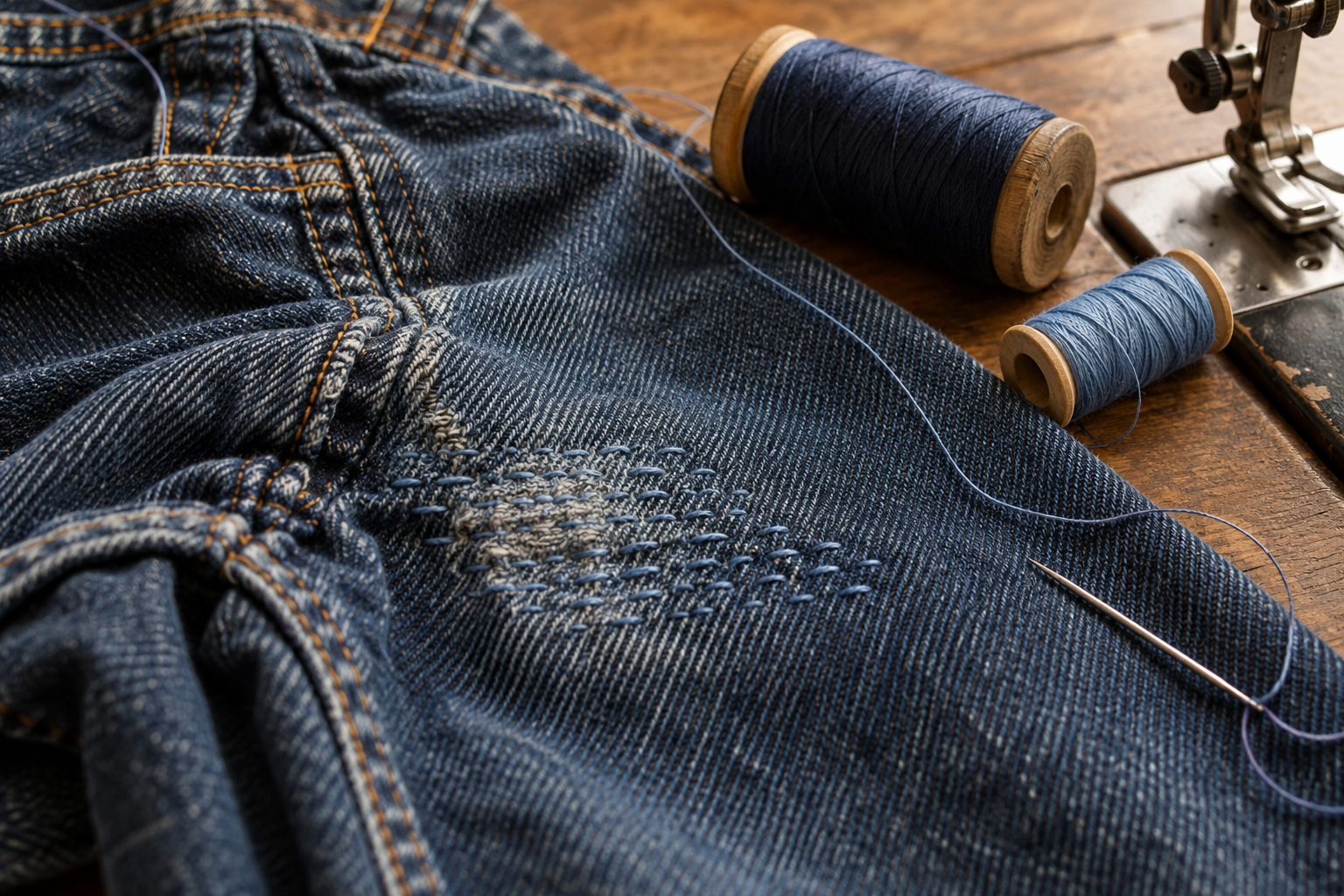
There are magnificent sewing tools. There are also perfectly adequate needles, thread, scissors and scraps already sitting in many households. I begin by finding what I have and deciding whether it suits the particular garment. A huge kit is an excellent way to spend an evening sorting possessions instead of mending.
I practice on a scrap when I am unsure. This gives the first awkward stitches somewhere less consequential to live. I also put the needle somewhere deliberate when I stop, because a shared dinner table needs to return to being a dinner table without unpleasant surprises.
The red patch has now survived enough ordinary use that I have stopped treating it as an experiment. It belongs to the jeans. The stitches have their own little irregular rhythm, which I rather like. I can point to the place where I learned something without opening a shopping history.
I am not arguing that anyone must spend every free evening repairing clothes. There are constraints: time, dexterity, space, skill and the actual state of the fabric. I am arguing with the automatic jump from one defect to an entire replacement.
Clothes can be ordinary objects with repairable problems. They do not need to become disposable because the repair would be visible in daylight.
Yesterday a colleague asked where I had bought the patched jeans. I told her they were the same pair I had been wearing for ages, now with a small red argument attached to the knee.
A thought worth keeping?