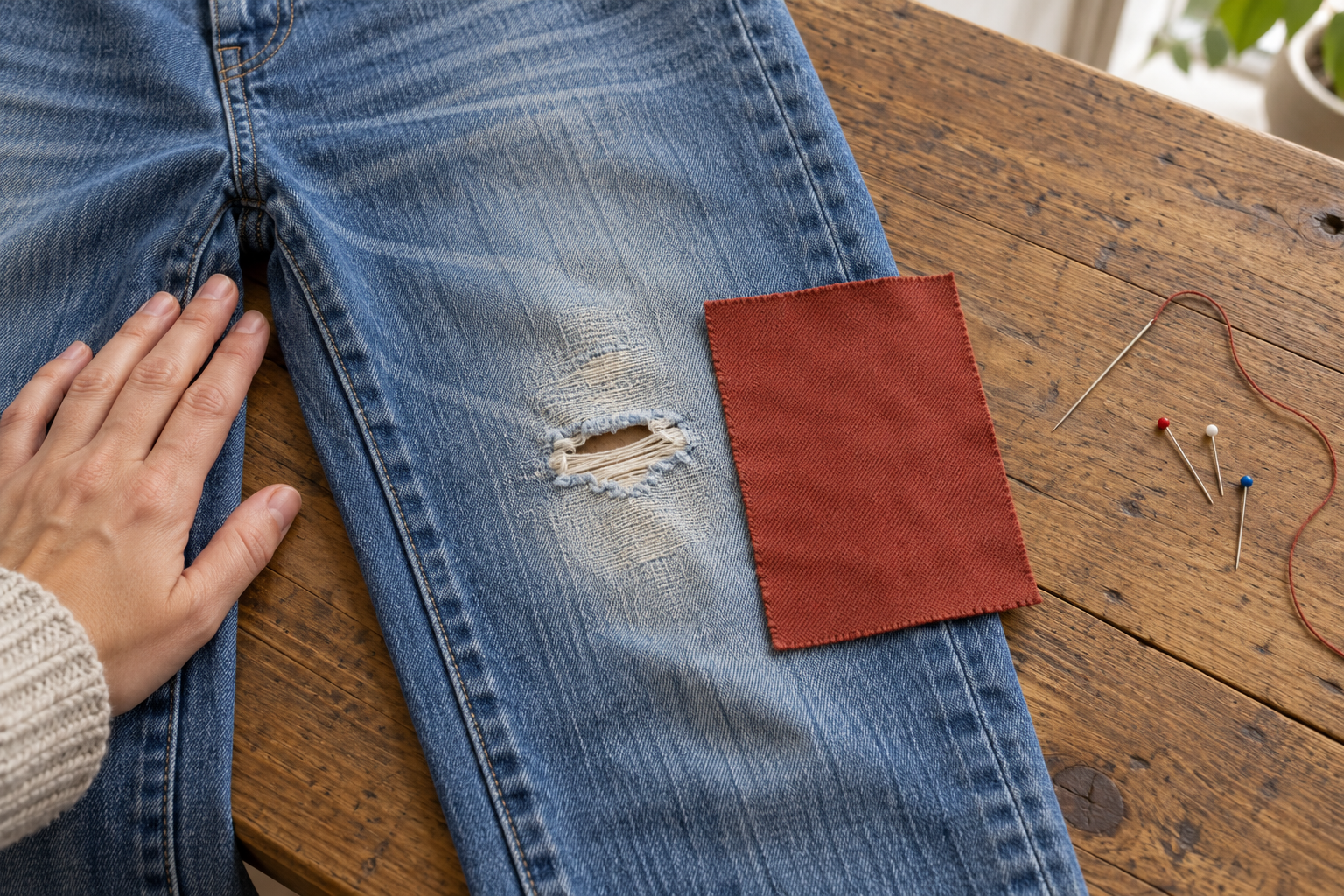
A hole is a poor ruler. On a pair of jeans, the gap at the knee may be no wider than a thumb, while the cloth around it has faded to a pale, thin oval. Cut a patch to the size of the gap and the new stitches may land in the very threads that are about to give way. The repair looks neat for an afternoon. Then a new tear opens just beyond its border.
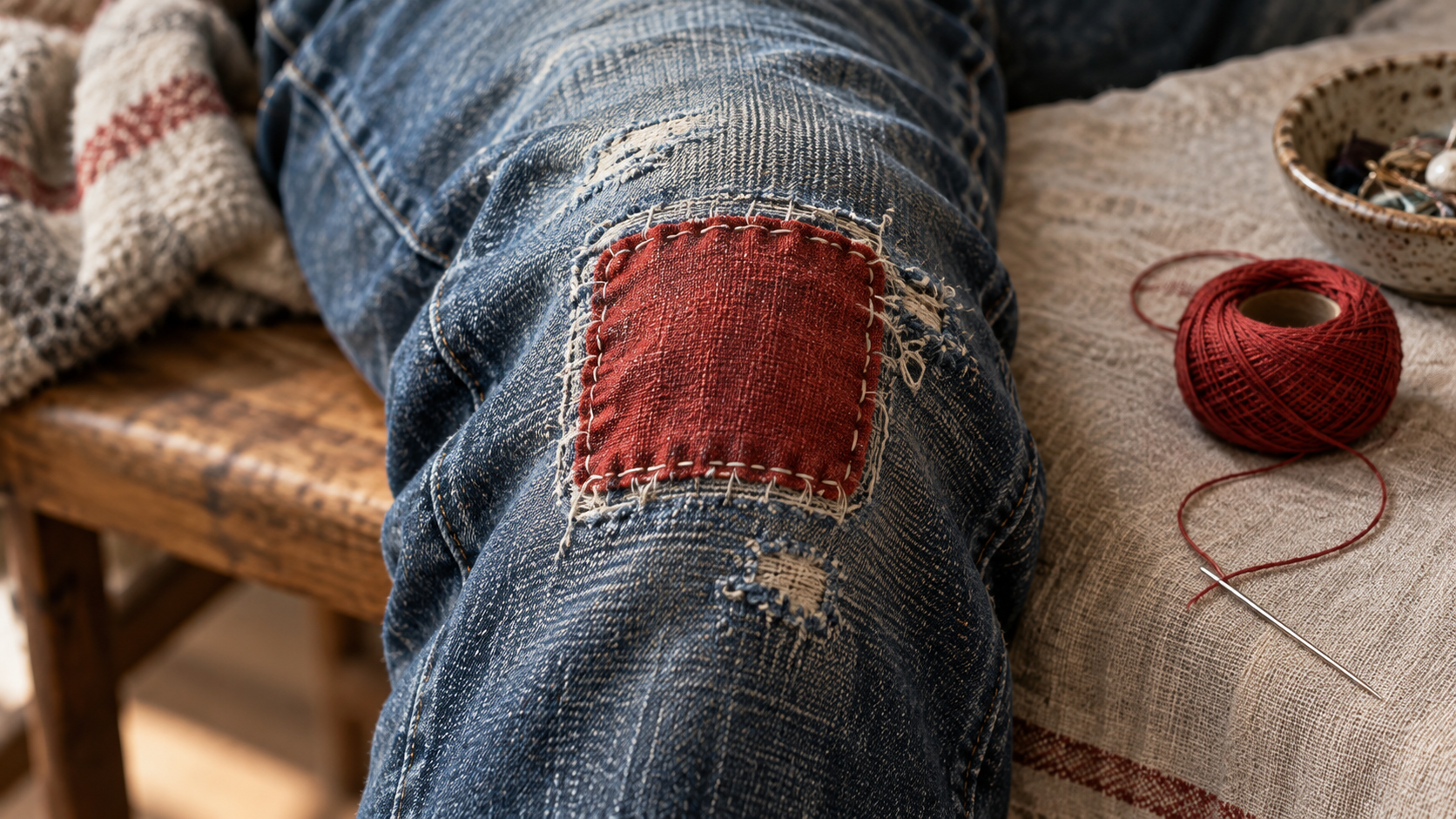
The red knee patch I wrote about earlier made a case for letting a repair show. It left a more useful question almost untouched: where should the patch stop? The answer is beyond the damage, which is often larger than the missing cloth. A 1938 University of Idaho clothing bulletin tells its readers to cut a patch that reaches past both the hole and the worn places around it. Its three-quarter-inch allowance belongs to that particular woven-cloth method, not to every garment on a modern washing line. The enduring instruction is to find fabric capable of holding the new stitching.
Read the cloth before cutting the patch
Lay the garment flat in good light and look across it, then turn it over. A hole from a snag can leave sound material close by. A knee worn down by repeated bending and rubbing may have a broad, soft-looking zone with loose threads, several pinholes and thinning you can see when it is held toward the light. Do not tug at a fragile edge to test it. Smooth the area gently and mark where the cloth becomes firm again. The boundary you are looking for is a change in strength, not the last visible strand around the opening.
The location explains some of the wear. Knees fold every time someone sits. A trouser seat rubs against chairs; a pocket corner takes a concentrated pull. A patch placed exactly on the ragged edge asks that weakened edge to carry the repair. A larger backing can move the attachment into sturdier cloth and support the worn area between. Levi's Tailor Shop distinguishes patching holes, darning against a backing, and more involved seat, crotch or panel repairs. That service menu is not a sewing instruction, but it makes an important point: the size and position of damage can change the kind of repair, not merely the patch's dimensions.
There is no prize for making the patch enormous, either. A stiff rectangle that reaches halfway round a knee may make the jeans awkward to bend and create a hard edge where the flexible old cloth meets it. I would rather put the edge in sound fabric with a comfortable margin, then check the garment on a bent knee before fixing it permanently. If the sound fabric lies past a seam or much of a panel is threadbare, the job may have grown beyond a simple patch. More cloth over the top does not restore strength to a whole failing section.
Choose a patch that can live there
For an ordinary woven cotton garment, a piece with a similar weight and behaviour is a sensible starting point. Heavy canvas over a light shirt can pull the fabric out of shape; flimsy cotton under a hard-wearing knee may add little support. Place a woven patch so its lengthwise and crosswise threads run with the garment's threads unless the repair design calls for another direction. The Idaho bulletin's darned-patch instructions specify matching those thread directions when the fabric has no pattern. A Repair What You Wear guide also limits a simple running stitch through both layers to fabric that does not need to stretch. Cloth cut or stitched against its natural movement can feel fine on the table and wrong on the body.
Colour can be discreet or gloriously obvious. It does not decide whether the repair works. The red scrap from the earlier jeans piece was useful because it made an acceptable patch and a visible one. A nearly matching blue scrap could do the same mechanical job with less attention. Repair What You Wear's jeans guide lays out patching, darning and decorative stitching as different approaches for tears, holes and worn areas; it specifically presents visible knee patches for woven clothes. Visibility is an editorial choice for the garment, not evidence that the patch has been placed well.
Hold the cut piece under or over the damage before stitching. An underpatch lets the worn original surface remain visible, with the new colour showing through the gap; an overpatch covers it. Either way, check where the perimeter falls. If it lands in the pale, easily separated halo, enlarge or reposition the piece. If the patch bunches when the knee bends, change its shape or material. Pin or baste it temporarily so you can assess the whole garment, not just the neat square laid flat on a table. Also check that the other side of a trouser leg has not been caught by a pin or needle. It is an absurdly effective way to turn one hole into an unwearable tube.
The edge is part of the repair
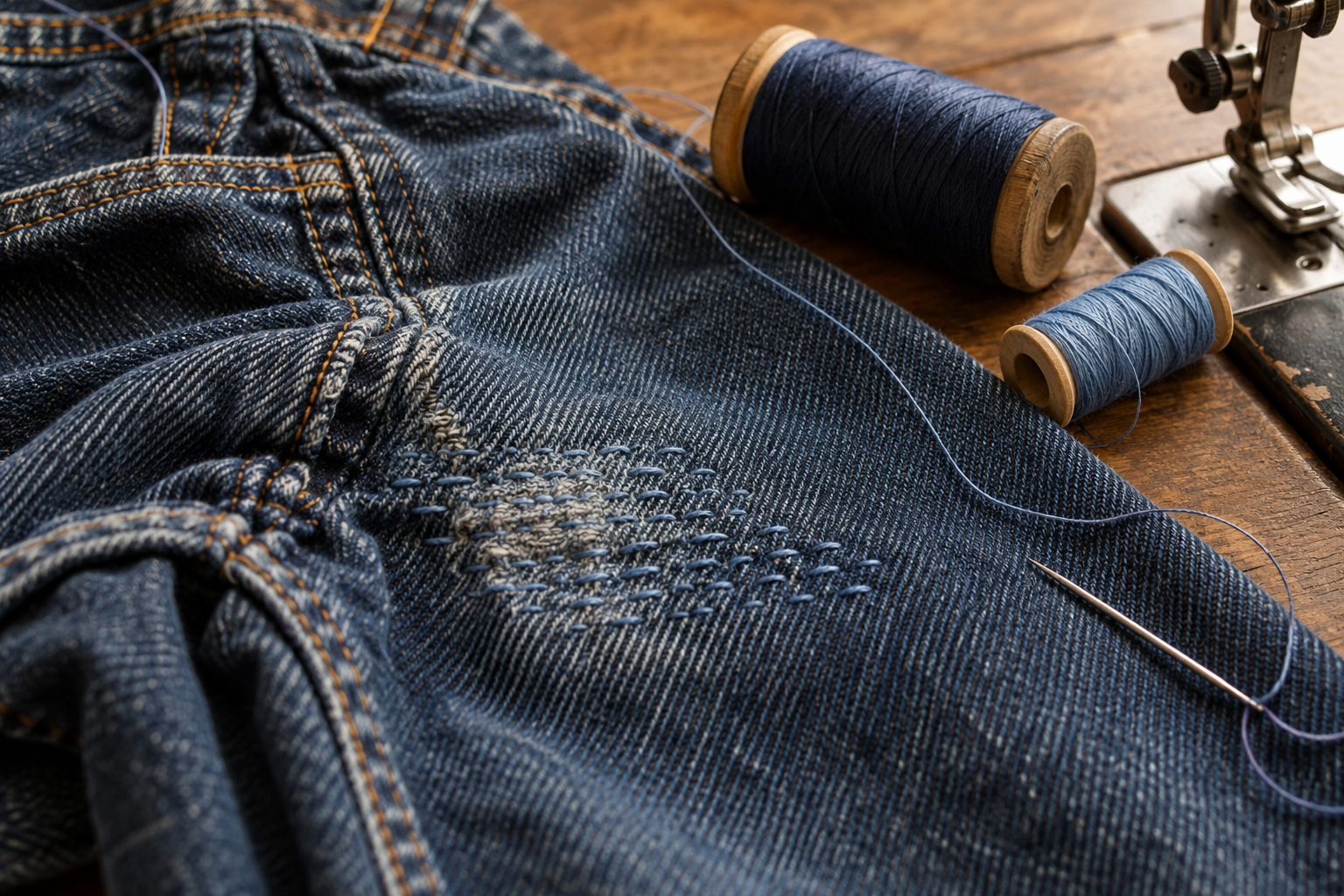
A patch needs more than a perimeter of stitches around the missing centre. The worn cloth between the hole and the outer edge still needs support. On a denim underpatch, rows of modest stitches through the sounder portions of the worn area can hold the old and new layers together; a line near the patch perimeter secures it in stronger fabric. Levi's describes its hand repair with visible running stitches as reinforcement, and its darning method as stitching over a thin backing to rebuild worn denim. Its repair descriptions do not prescribe one stitch spacing or pattern for every pair of jeans, and neither should this piece.
Work without pulling each stitch so tight that the cloth puckers. A patch that lies flat on a table but gathers the knee when worn is telling you about tension. Keep the layers smooth and use enough stitches to hold them, while avoiding a dense ring of needle holes at one stressed line. Decide what to do with the patch's own cut edge. A woven scrap can fray; folding or otherwise securing that edge may suit a tidy, frequently washed repair, while a visible raw edge can be part of a deliberately rougher one if it is controlled. The Idaho method holds a raw-edged underpatch with darning and additional stitches rather than treating every patch as an iron-on badge. It is one method, not a universal finish.
The word patch also covers materials that behave nothing like denim. A small puncture in a synthetic down-jacket shell may call for repair tape rather than rows of needle holes that let insulation escape; Repair What You Wear's waterproof-jacket instructions caution that sewing through a waterproof membrane damages it. Patagonia's May 2026 guide tells readers to clean and dry a down-jacket shell and use fabric repair tape; it specifically warns that the tape it recommends does not stick to natural or stretchy fabrics. Its procedure is for compatible outerwear. Transplanting the same tape onto a cotton jean knee and calling the job done would ignore the material the adhesive has to grip.
There are also objects on which a home repair should pause. An antique silk quilt or a historic garment is not just an old pair of jeans with a more dramatic backstory. Fibres, dyes and finishes may be too fragile for ordinary stitching or cleaning. The US National Park Service's textile-care handbook asks conservators to weigh structural support against appearance and notes that some brittle silks may not tolerate needle-and-thread repairs at all. That advice concerns collections, not the denim in a daily wardrobe. It marks the limit of a cheerful do-it-yourself rule.
For the jeans on the table, the final test is mundane: bend the knee, look at the edge, and feel whether the patch pulls or catches. Turn the leg inside out and check the stitches there too. If a little crescent of thin denim still lies beyond the patch, the repair stopped early. If the patch covers sound cloth and moves with the leg, it has a fair chance to do the unglamorous work for which it was cut. The visible hole told you where to begin looking. It did not tell you where to stop.

A thought worth keeping?